
During Erasmus Days 2026, on Thursday the 15th of October, Euro App Mobility brought together various stakeholders in international apprentice mobility at the French Ministry for the Economy and Finance for the conference “Towards the European Apprenticeship Area” (TEAA). Held under the high patronage of the President of the French Republic and opened by the French Minister of Labour, Jean-Pierre Farandou, the day led to the adoption of a joint declaration titled “Towards the European Apprenticeship Area”.
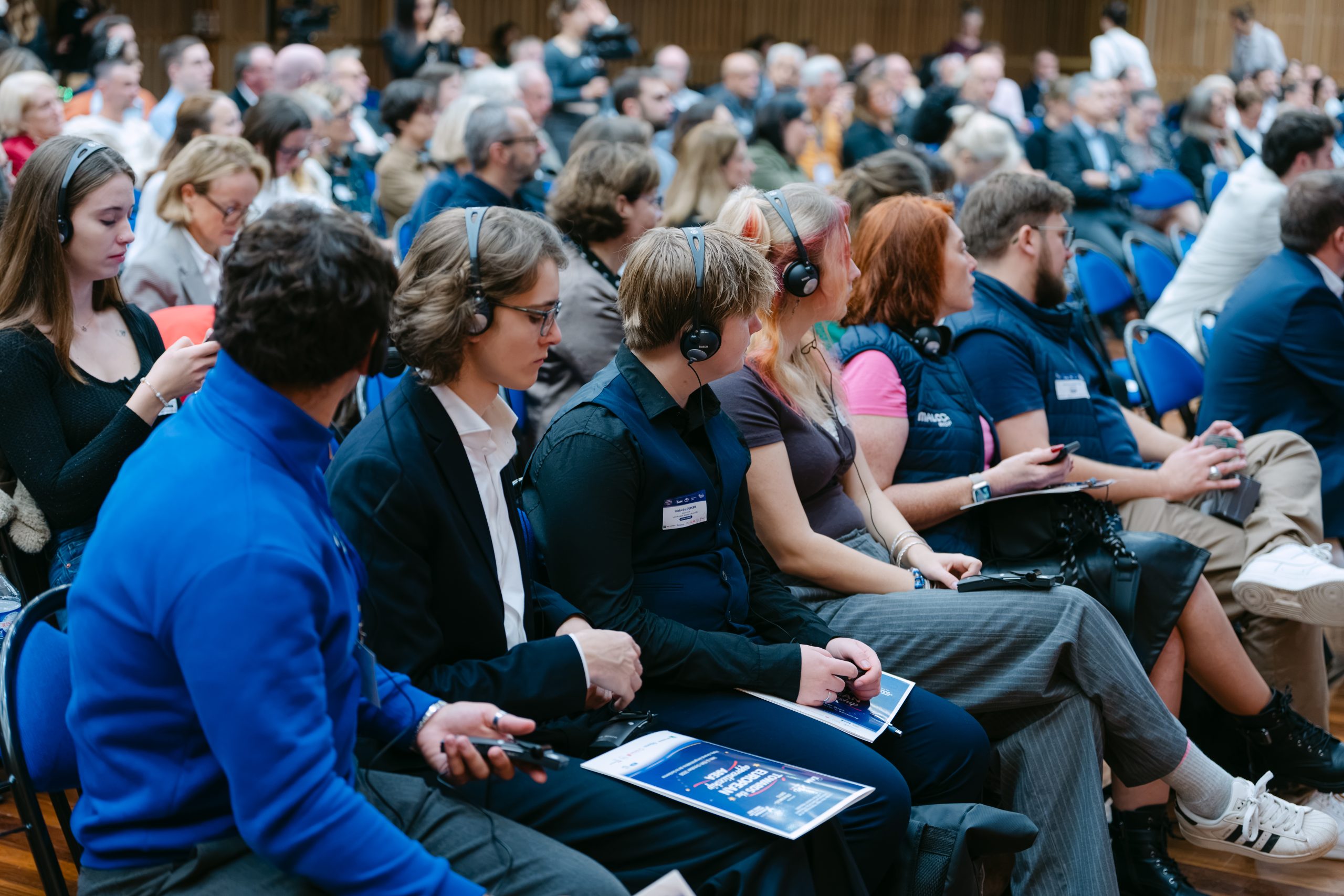
The Pierre Mendès France conference hall, French Ministry for the Economy and Finance, 15th of October 2026.
© Shiran Potié
Nearly 550 participants from 14 European Union countries (French and European policymakers, representatives of apprenticeship training centres (CFAs), employers and apprentices) gathered in the Pierre Mendès France conference hall to share their experiences. All carried the same message: international apprentice mobility must be scaled up.
To close the day, Jean Arthuis, former French minister and President of Euro App Mobility, chose the words of Victor Hugo: “Nothing is more powerful than an idea whose time has come.” Words which, in his view, “express exactly what we felt during that day”. As the declaration was adopted, he added: “The time has come to give substance to the European Apprenticeship Area.”
Apprentices and employers laid the groundwork on the 14th of October
Reflections on the future of apprenticeship mobility began the day before. On Wednesday the 14th of October, some forty apprentices from across Europe, each having gone abroad during their apprenticeships, took part in a preparatory day at FIAP Jean Monnet in Paris. Working in four groups, they shared their experiences and drew up recommendations on four themes: financial and living conditions, skills development and relations with employers, languages and cultural differences, and administrative burdens. They appointed spokespeople and jointly drafted a contribution to the Joint Declaration, to be presented the following day.
The same opportunities for apprentices as for students
Opening the conference, the Minister of Labour, Jean-Pierre Farandou, called for equal access to international placements for students and apprentices. He asked the audience why a student should be able to spend several months abroad, but not an apprentice baker, electrician or mechanic. “European-level training must not stop at the doors of universities,” he insisted, before recalling that learning one’s trade in another country “is much more than just a trip”.
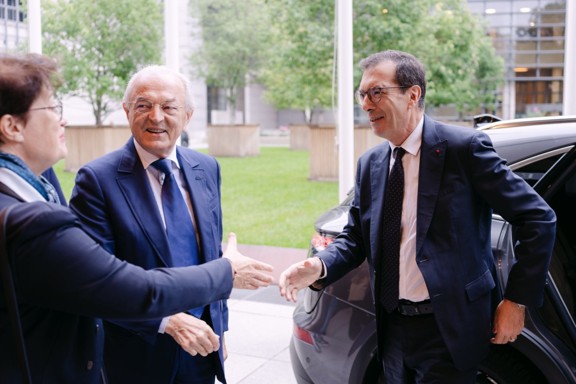
Arrival of the French Minister of Labour, Jean-Pierre Farandou. © Shiran Potié
According to Jean-Pierre Farandou, young people cannot be prepared for the jobs of tomorrow if their horizon is limited to their company, their region or their country. Jobs are changing, companies work with European partners and know-how circulates: a Europe of apprenticeships must become a reality for all young Europeans. “We have shown that this idea was possible. It is now up to us to make it accessible to as many people as possible,” he concluded. This is a conviction shared by Jean Arthuis, for whom apprentice mobility is one of the answers to the concerns of many young people in Europe.
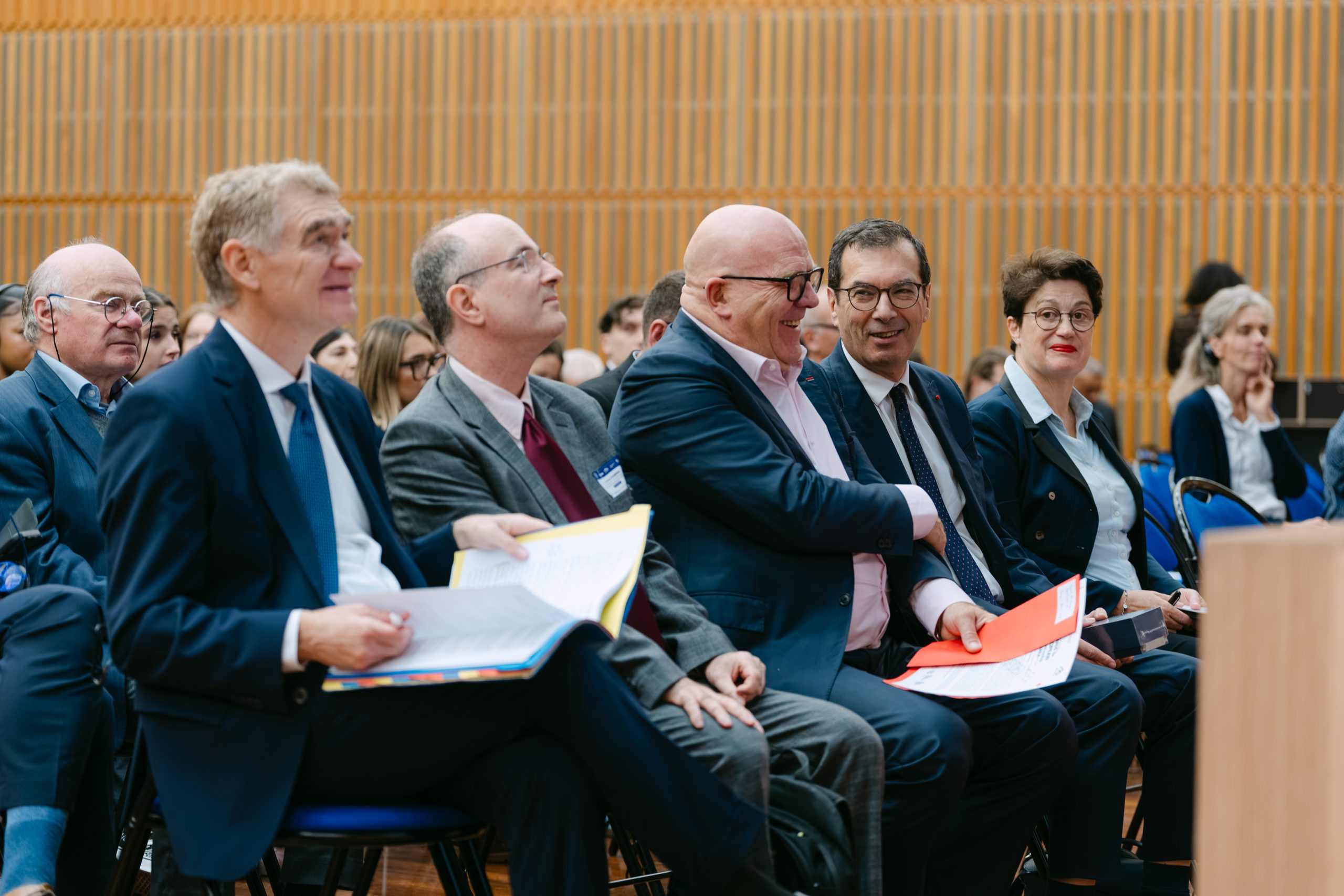
Front row: Mario Nava, Tamas Varnai, Bruno Bonnell, Jean-Pierre Farandou and Nelly Fesseau. © Shiran Potié
Apprentices put forward their own recommendations
On the 15th of October, the apprentices from the day before took the floor. A first spokesperson represented the apprentices during a roundtable titled “Apprentices on the Move: Cross Perspectives”. In the closing sequence, four spokespeople, one per theme, presented the apprentices’ recommendations for the Joint Declaration to the assembly. They went as follows:
- Financial and living conditions: the apprentices praise the accessibility and inclusiveness of the programmes. In their view, larger Erasmus+ grants could allow for better-quality cultural immersion. Transport and housing remain areas for improvement.
- Skills and employers: the young people ask that each stay be prepared in advance with their respective training centres and companies to clearly set out learning objectives, and that former apprentices share their experiences in order to inspire others.
- Languages and cultural differences: mobility pushes you out of your comfort zone, helps you grow and builds your confidence. The apprentices ask for support in making connections locally, Erasmus+ financial support and safe work placements. They suggest creating a website with practical information for each city and a platform for sharing feedback.
- Professional development: mobility gives apprentices an international network, skills and experience. Its strengths are Erasmus+ funding and the support of schools, companies and intermediaries. However, a weak point remains: placements abroad sometimes do not match the apprentice’s trade.
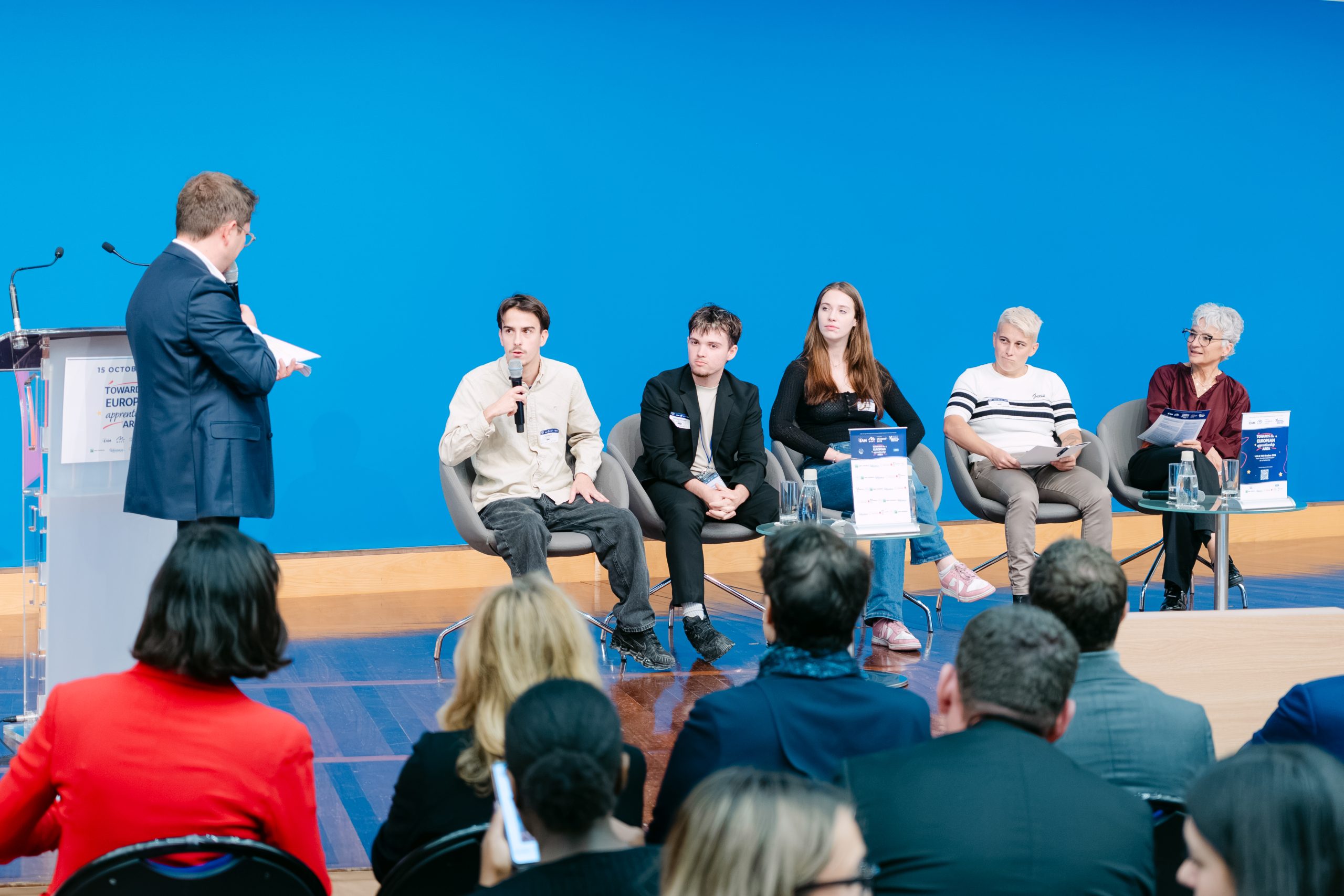
Apprentices on stage during a roundtable, 15th of October 2026. © Shiran Potié
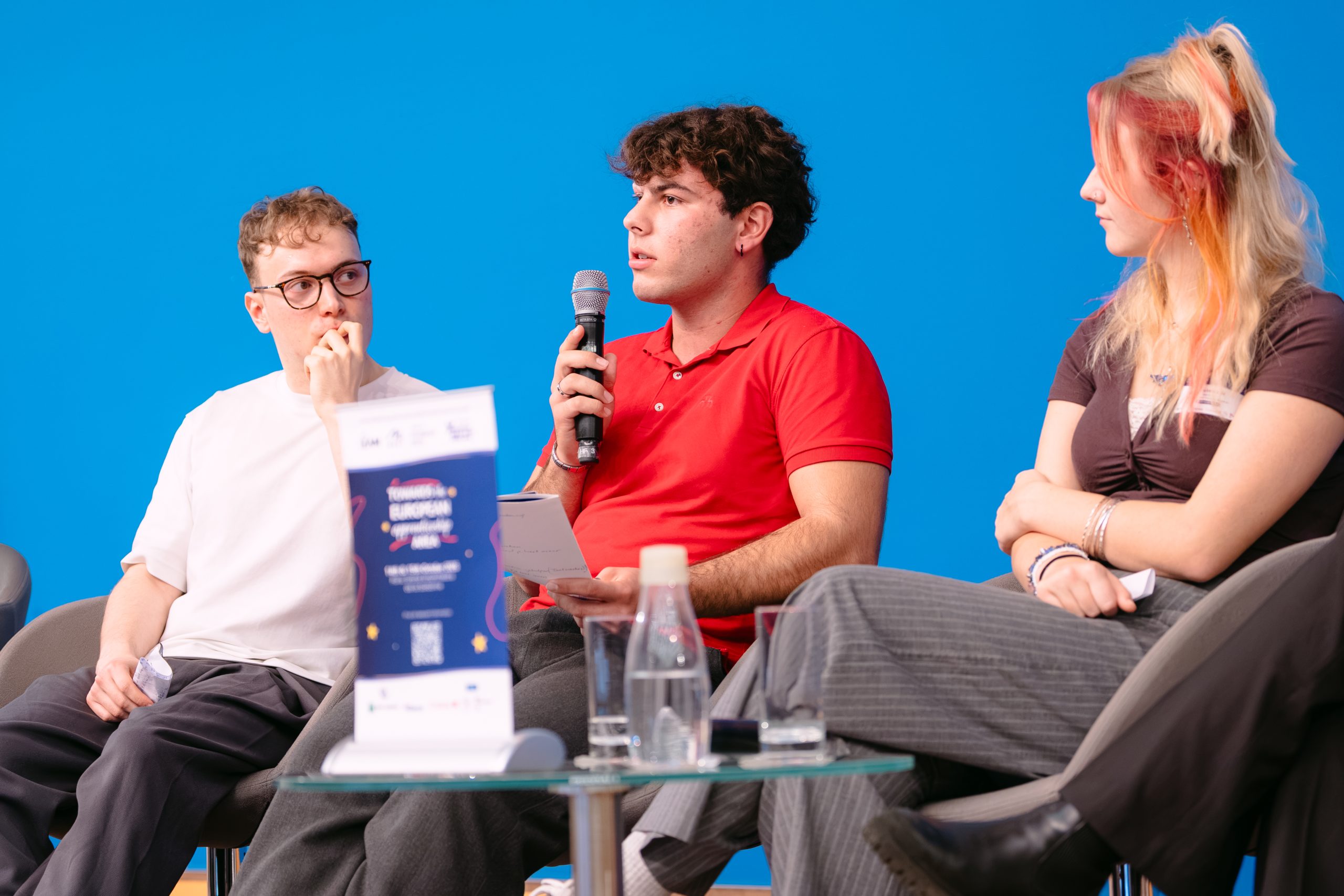
An apprentice speaking during a roundtable, 15th of October 2026. © Shiran Potié
French and European goals to be met
Clément Beaune, French High Commissioner for Strategy and Planning and former Delegate Minister for European Affairs, recalled a goal set by Emmanuel Macron: that half of each age group spend at least six months in another European Union country before the age of 25, apprentices included. He acknowledged that this goal has not yet been reached. At European level, the EU set a goal of 12% of vocational learners taking part in international mobility by 2030.
According to Clément Beaune, mobility truly transforms apprentices: “Going away for several weeks, or even several months, means learning new skills, new techniques, a new language, how to manage on your own. You come home with a trade, stronger skills, maturity and more confidence.”
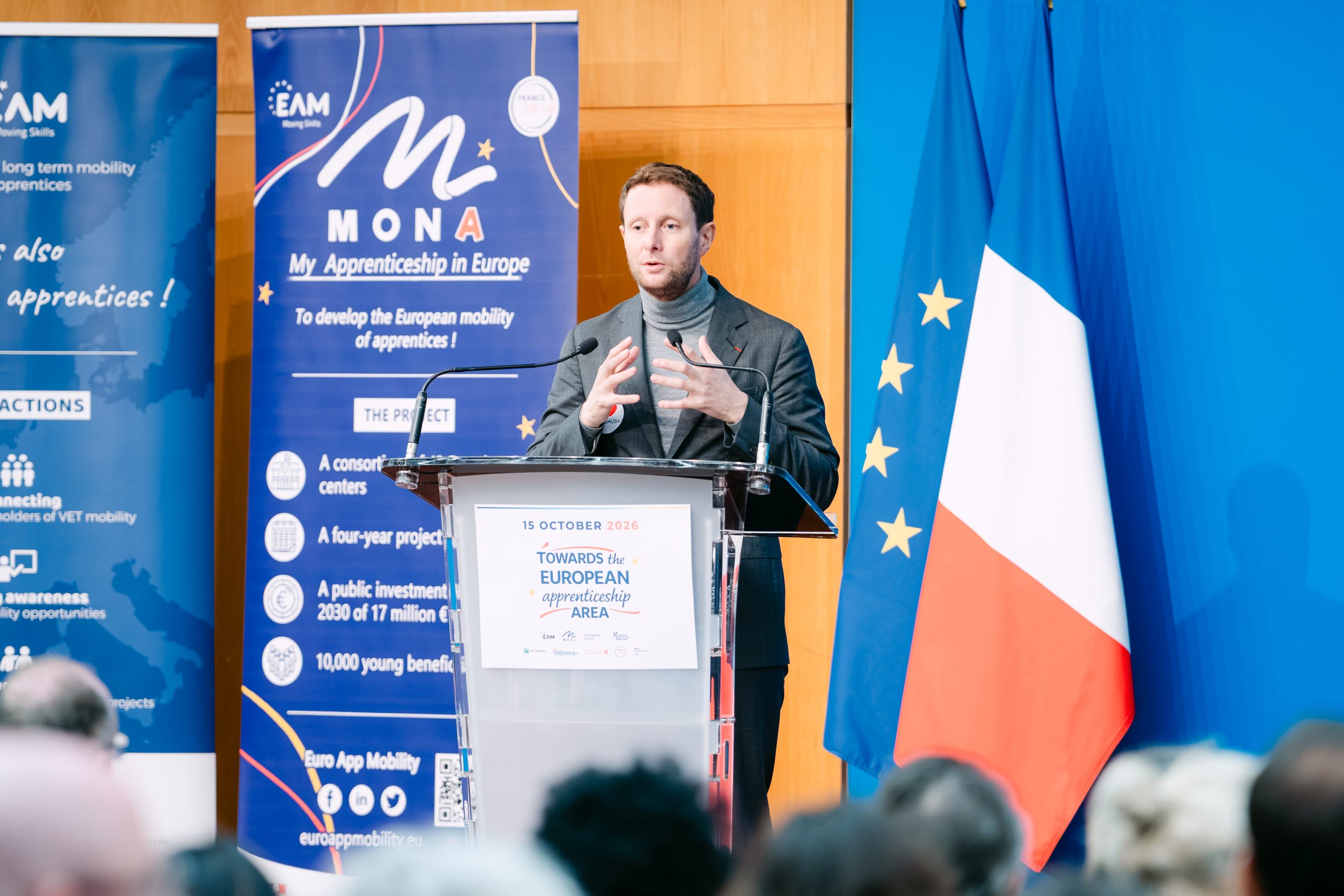
Clément Beaune at the podium. © Shiran Potié
“We must make sure that skills circulate in Europe: that is this continent’s advantage,” stressed Mario Nava, Director-General for Employment, Social Affairs and Inclusion at the European Commission.
The Skills Portability Initiative, published on the 15th of September, serves this purpose by enabling professionals to have their skills recognised in a country where their trade is regulated differently. He also announced that from March 2027 the European Commission will welcome its first vocational trainees—100 in the first year—and that he hopes to welcome more in the future. The Commission will present its European strategy for education and training in November—Euro App Mobility hopes that apprentice mobility will be one of its flagship measures.
Real progress, obstacles still to be removed
For six years, Euro App Mobility has been working to show that Erasmus+ placements of several months are accessible and beneficial to apprentices. The framework has evolved: the French law of the 5th of September 2018 made it compulsory for every training centre to appoint a mobility officer, following the report submitted by Jean Arthuis to the Minister of Labour in January 2018. The law “for an Erasmus of apprenticeships” of the 27th of December 2023, sponsored by MP Sylvain Maillard, who spoke at the conference, aims to ensure that no young person gives up on going abroad for administrative or financial reasons.
More and more training centres are going international, and departures are increasing. But the mobility rate remains below target. Jean Arthuis stressed the issue of reciprocity: seen from France, incoming mobility remains far less common than outgoing mobility. He urged training centres to make use of the 2023 law to host foreign apprentices for periods of more than two months.
Ipsos survey: the French public and companies are convinced, but obstacles remain
The Ipsos survey for Euro App Mobility, presented by Executive Director Paola Bolognini, was conducted online from the 1st to the 6th of October 2026, surveying 1,000 French people aged 18 and over and 300 companies with 6 or more employees. It confirms strong support for apprenticeship mobility, but also recurring obstacles on the business side.
Key figures
- 95% of French people and companies have a positive image of apprenticeships.
- 85% of French people and 87% of companies consider it relevant for an apprentice to complete part of their training abroad.
- 68% of companies already allow apprentices to go abroad or would be willing to do so.
- 79% of French people want public authorities to devote more resources to it.
But 75% of companies feel that an apprentice’s absence is hard to reconcile with how they operate. Their top expectation is compensation for salary costs during the apprentice’s absence.
The Employers' Club goes European
To convince hesitant employers, Euro App Mobility relies on its Employers’ Club for a European Apprenticeship Area, set up in 2024 with the support of various employer organisations (Medef, Les Entrepreneurs (formerly CPME), U2P and FNSEA), organised around regional meetings led by spokespeople from the business world. At a dinner held at the French Senate on the 14th of October, the association launched a European Employers’ Club, attended by companies, chambers of commerce and employers’ organisations from several countries. Discussions focused on the benefits of mobility for companies and on the different ways to facilitate it.
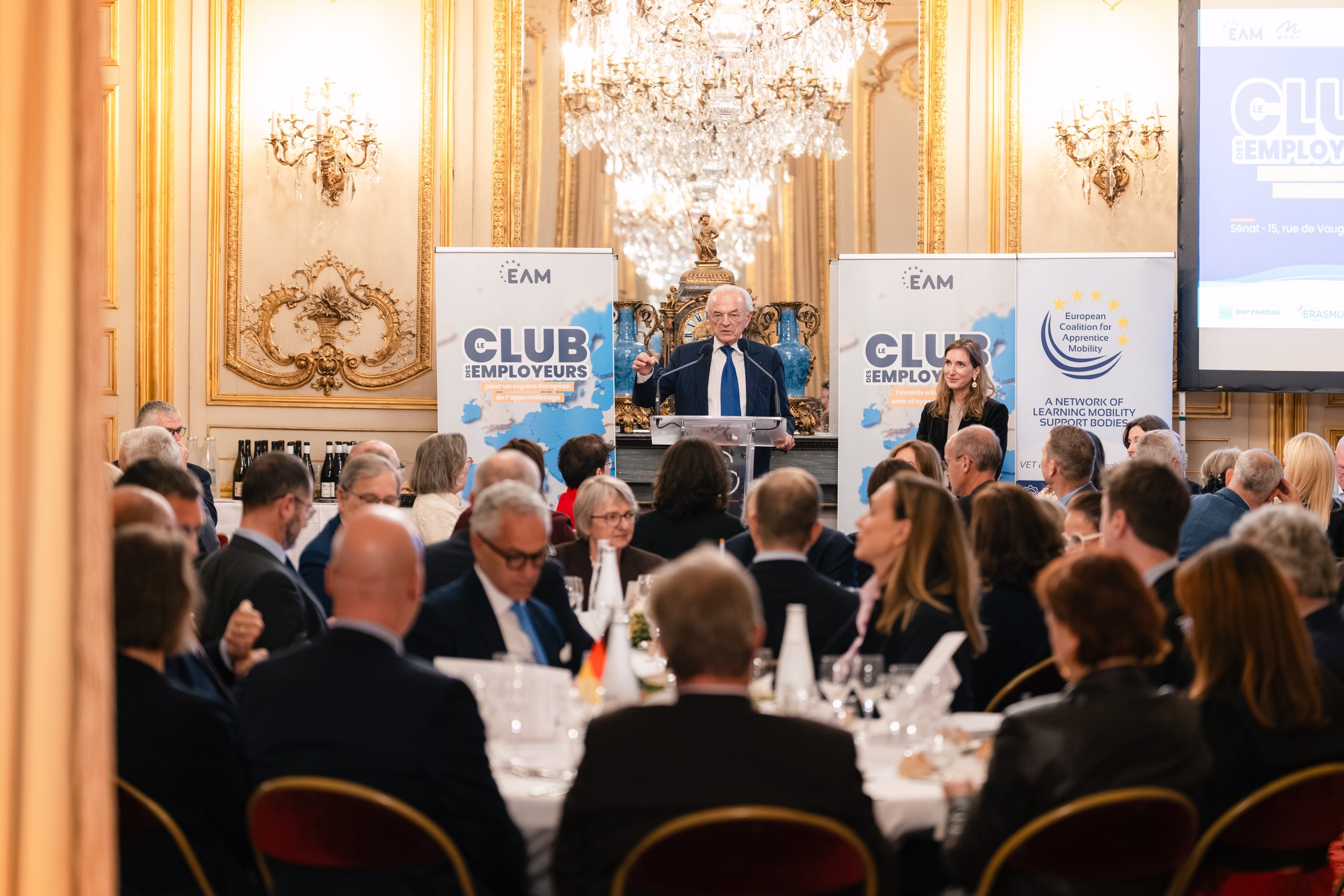
Speech by Jean Arthuis, President of Euro App Mobility, at the French Senate. To his right is Carole Grandjean, HR Director of Vinci Concessions and President of WorldSkills France. © Shiran Potié
Jean-Christophe Sciberras, coordinator of Global Deal France and facilitator of the French Employers’ Club, has already recruited the first European employers. Clubs will then be set up in different countries, beginning with the countries of the members of the European Coalition for Apprentice Mobility (ECAM).
The seven goals of the "Towards the European Apprenticeship Area" declaration
Adopted by participants at the end of the day, the joint declaration sets out seven goals:
- To professionalise and support the staff in charge of apprentice mobility.
- To strengthen cooperation between all stakeholders across borders and connect ecosystems, following the example of ECAM.
- To roll out Employers’ Clubs for apprentice mobility across European countries and regions.
- To assess and recognise learning outcomes from mobility when certificates and diplomas are awarded in the home country.
- To converge national frameworks to facilitate outgoing and incoming mobility, particularly for levels 3, 4 and 5.
- To provide sufficient Erasmus+ funding for vocational education and training in the 2028–2034 multiannual financial framework, in order to reach the 12% target adopted in May 2024.
- To recognise international apprentice mobility in the forthcoming European vocational education and training strategy.
Common framework, recognition of skills and budget: the next steps
To give substance to these goals, Euro App Mobility is leading two projects. The first aims at the convergence of national regulations. One avenue is to put forward proposals to the European institutions, in particular for a common framework for European apprentices on mobility. In some countries, regulations still prevent apprentices from completing part of their training abroad.
The second is the EAM Connect app, which highlights the professional and transversal skills acquired during mobility. The Minister of Labour also stressed the importance of recognising these skills, pointing to the Skills Passport of his “Future Employment” (Emploi Futur) plan as an avenue to explore with stakeholders.
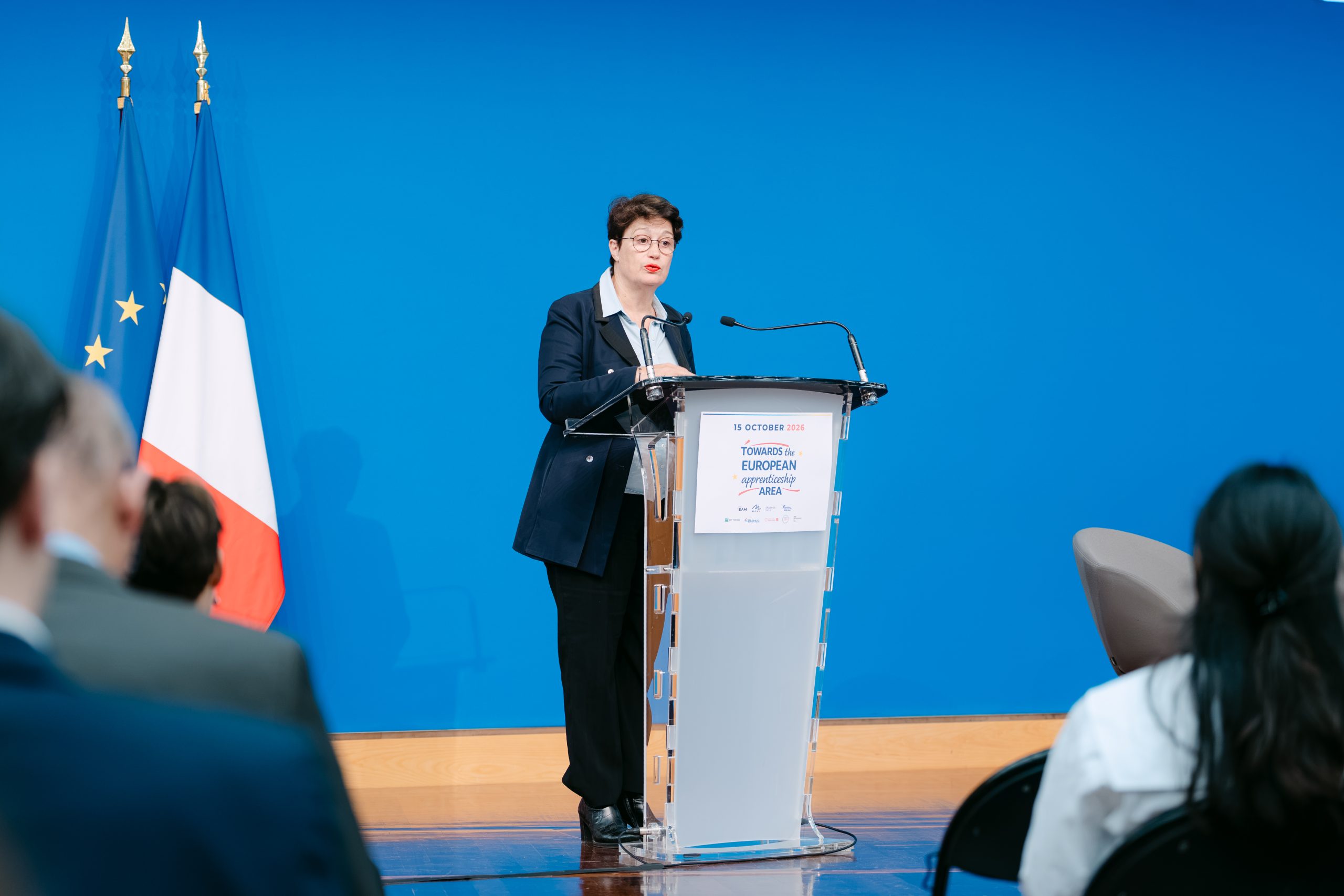
Speech by Nelly Fesseau, Director of the Erasmus+ France Education & Training Agency.
© Shiran Potié
Concerning the budget, all speakers called for more resources. Nelly Fesseau, Director of the Erasmus+ France Education & Training Agency, argued for a significant increase in Erasmus+ funding for 2028–2034, recalling that “90% of apprentices who have completed a mobility period as part of their training say they are ‘absolutely enthusiastic’ about the experience”. The Commission is proposing a 50% increase in programme funding, currently under negotiation with the Parliament and the Council. Jacqueline Pacaud, head of the Erasmus+ sector at DG EAC, explained that the distribution of funds by sector has not been determined yet; however, several stakeholders are calling for a share to be reserved for vocational training.
From Mona to Liisa: a springboard and a new fund
The conference was also an opportunity to present the results of Mona, a pilot project led by Euro App Mobility since 2022 with 57 volunteer training centres and supported by France 2030. The results read as follows:
- nearly 20,000 international placements completed, with an average duration of 49 days;
- more than 600 young Europeans welcomed in France;
- 83 mobility officers trained in training centres;
- around forty practical tools and guides made freely available for training centres around France.
The Liisa fund, launched by Euro App Mobility in partnership with the Michelin Foundation, builds on the momentum created by Mona. It will award grants to level 3, 4 and 5 apprentices from the Auvergne-Rhône-Alpes region and Euro App Mobility’s partner training centres who go abroad to another European country for at least two months, so that out-of-pocket costs are no longer an obstacle.
Euro App Mobility thanks France 2030, the Banque des Territoires, BNP Paribas and its foundation, the French Ministry for Europe and Foreign Affairs and the Erasmus+ Agency, whose support made this event possible.
Photo credits: Shiran Potié — LinkedIn — Instagram: @potiephoto


